

Support is the Real UI of Product Friction
When software founders design applications, they obsess over button radius, typography, onboarding micro-copy, and sub-100ms API response times. Yet when that same application fails or confuses a user, the experience often collapses into an impersonal, disconnected maze.
The customer encounters an unexpected error, clicks a "Help" link, and is kicked out of the application into a generic third-party portal. They are asked to log in a second time, choose from twelve confusing dropdown menus, and wait days for a boilerplate response that asks: "What browser are you using?"
This reveals a fundamental misunderstanding: customer support is not an administrative cost center separate from your product. Support is an intrinsic part of how users experience your software.
In fact, the moment a user reaches out to support is often the single most critical touchpoint in their entire customer lifecycle. They are frustrated, stuck, or at risk of failing an important work deadline. How your company responds during that moment of vulnerability determines whether they churn or become a lifelong advocate.
The Problem with Clunky Customer Portals
For years, legacy customer service vendors promoted the idea of the "self-service customer portal." In theory, having customers log into a web portal to view ticket statuses sounded organized. In practice, customers universally dislike it:
- Users do not want another username and password just to ask a question.
- Portals hide conversation updates behind unread notification emails that require clicking a link to read the response.
- Mobile users find portals clunky and difficult to navigate on small screens.
Customers want straightforward, reliable communication. For B2B and SaaS products, email remains the undisputed gold standard of customer communication. When you reply via email, your answer lands directly in the customer's everyday inbox. They can read it on their phone, forward it to a colleague, or reply with one click.
Building the Support-to-Product Feedback Loop
When support is treated as an isolated silo, product managers and software engineers build features in an echo chamber. Support tickets are summarized once a month into vague metric reports like "Ticket volume up 12%."
When support is connected directly to product development, support tickets become your most valuable source of user research:
The Two-Degree Shift
Instead of viewing a recurring support ticket as an operational burden to resolve quickly, view it as a bug in your onboarding or product design. Fix the underlying friction in your codebase, and the tickets vanish forever.
Practical ways to bridge the gap between engineering and support:
- Give Engineers Real Seat Access: When your helpdesk charges $60/seat, engineers are excluded to save costs. With an unlimited-agent model like HDdesk, engineers and product designers can log in directly, read original customer bug reports, and see the exact screenshots users submitted.
- Tag Tickets by Product Feature: Tag incoming inquiries with feature flags (e.g.,
feat:csv-importorfeat:billing-portal). During sprint planning, pull up ticket counts for each tag to prioritize UX improvements based on real user confusion. - Close the Loop with Customers: When a user reports a bug and your team deploys the fix two weeks later, reopen the ticket and reply: "We just pushed an update that resolves the exact issue you reported." Customers are astonished when a software company actually follows up, turning a frustrating bug into a viral retention moment.
Three Steps to Unify Support and Product
To turn your customer support into a competitive advantage:
- Eliminate portal friction: Provide clean, direct email communication where customers write to your verified domain and receive authentic branded responses.
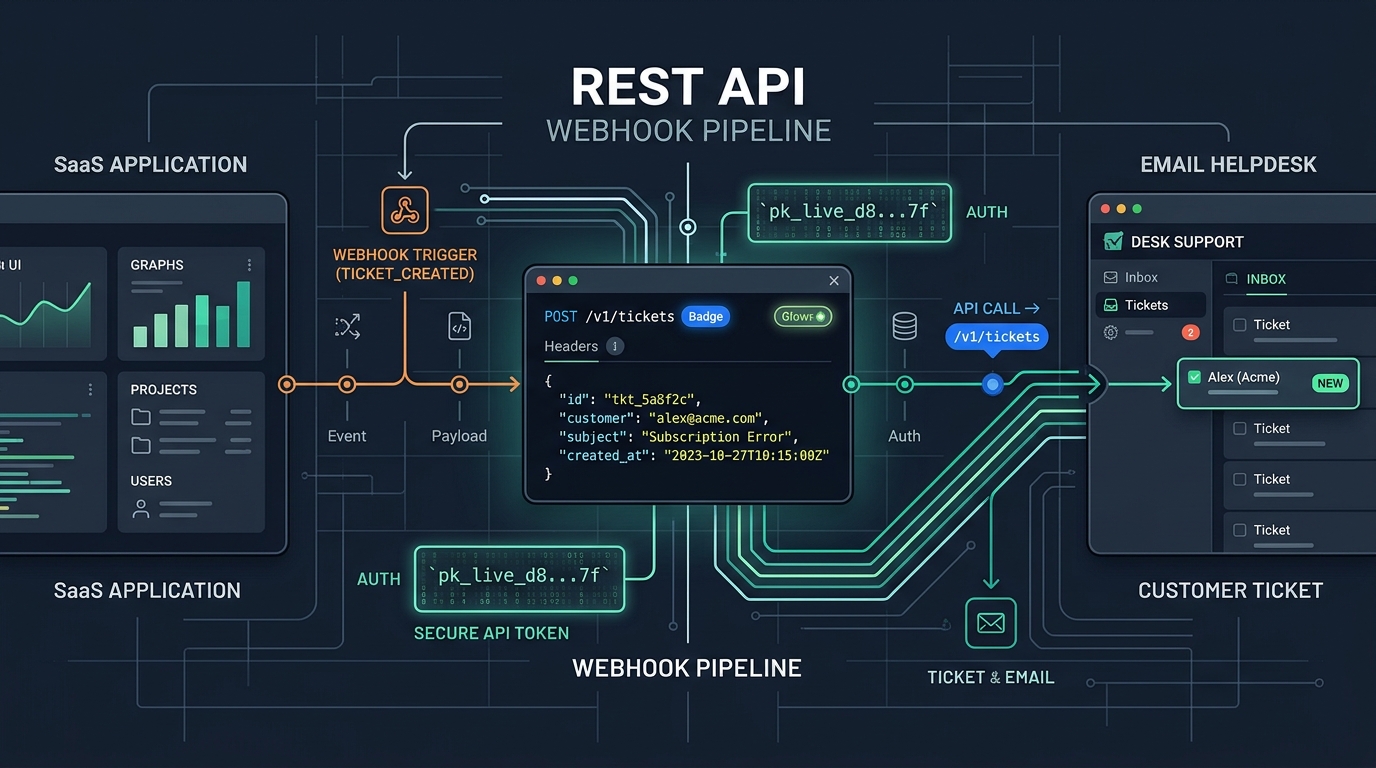
- Enrich support context via API: Pass relevant account metadata (tier, signup date, project ID) with incoming tickets so your team never asks customers to repeat information.
- Involve the whole team: Remove per-seat financial barriers so your builders, designers, and support specialists work together in one shared workspace.
Elevate your customer support experience
HDdesk brings your entire team together with unlimited agent seats, branded multi-domain email support, and powerful API integrations.