
The Infrastructure Evolution in Modern SaaS
Fifteen years ago, when a software startup launched a web application, the engineering team built virtually everything from scratch: they wrote custom user authentication schemes with salt-and-hash algorithms, integrated directly with payment gateway merchant accounts, and managed their own physical database servers.
Today, no competent CTO would sanction building a proprietary identity provider, payment processing engine, or cloud database cluster. Modern development relies on specialized, developer-friendly infrastructure: Auth0 or Clerk for identity, Stripe for billing, and AWS or Cloudflare for hosting.
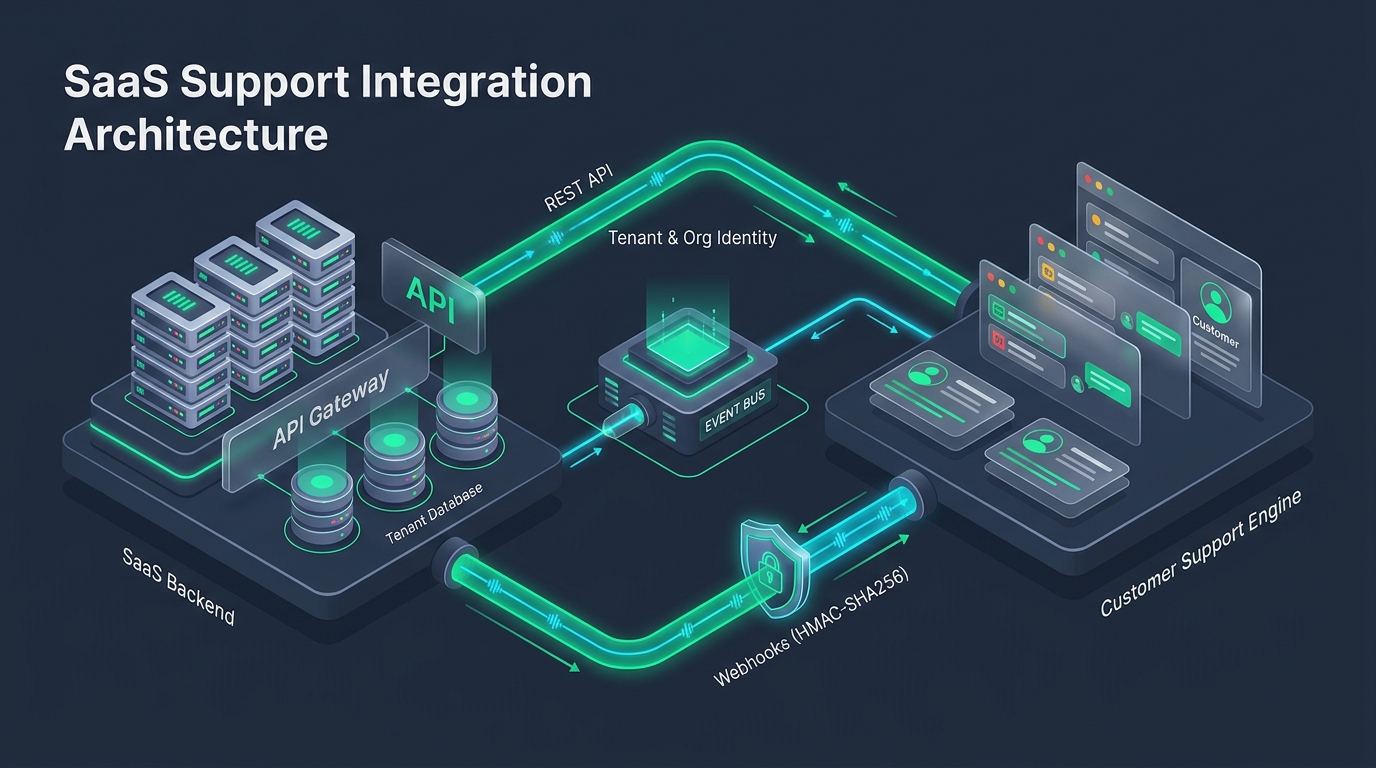
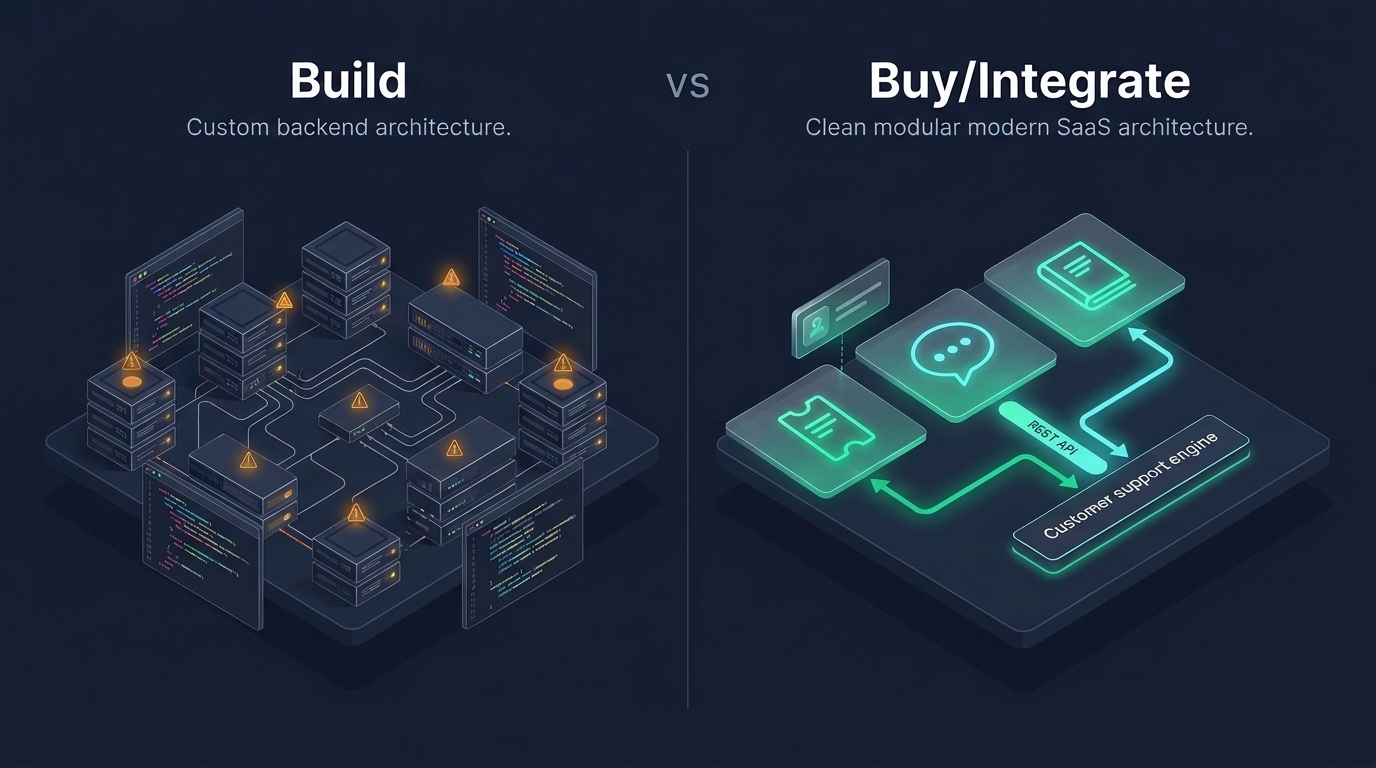
Now, customer support is undergoing the exact same architectural shift. Progressive engineering organizations recognize that customer support is infrastructure. Attempting to build and maintain bespoke ticketing, email routers, and chat widgets in-house is an outdated pattern that wastes valuable engineering bandwidth.
The Architectural Maxim
Own the customer relationship and business context; integrate the transport, state machines, and triage infrastructure.
What Product Teams Should Own: Context, Policies, and Journeys
Treating support as infrastructure does not mean abdicating responsibility for the customer experience. On the contrary, delegating the underlying plumbing frees product teams to focus deeply on what truly matters: customer context and operational policies.
Product teams should deliberately design and own:
- In-App User Context: Defining what diagnostic telemetry (active route, tenant ID, organization plan, recent API errors) should be attached when a user requests assistance.
- Escalation Policies: Establishing clear business rules for priority handling (e.g., automatically routing enterprise billing disputes to a dedicated account manager).
- Authentication & Permissions: Ensuring that customer identities are verified securely through your core app before granting access to support records.
- Continuous Product Feedback Loops: Analyzing ticket trends, bug reports, and customer friction points to directly inform upcoming roadmap sprints.
What Teams Should Integrate: Message Transport & State Engines
Conversely, the underlying mechanisms of customer communication are generic across all software companies. There is zero competitive advantage in writing proprietary code for these subsystems:
| Support Subsystem | Commodity Responsibility | Why Integration Wins |
|---|---|---|
| Email MIME & Transport | Parsing incoming email headers, handling attachments, managing SPF/DKIM authentication, and preventing mail delivery loops | Email protocols are non-standard and break custom parsers continuously |
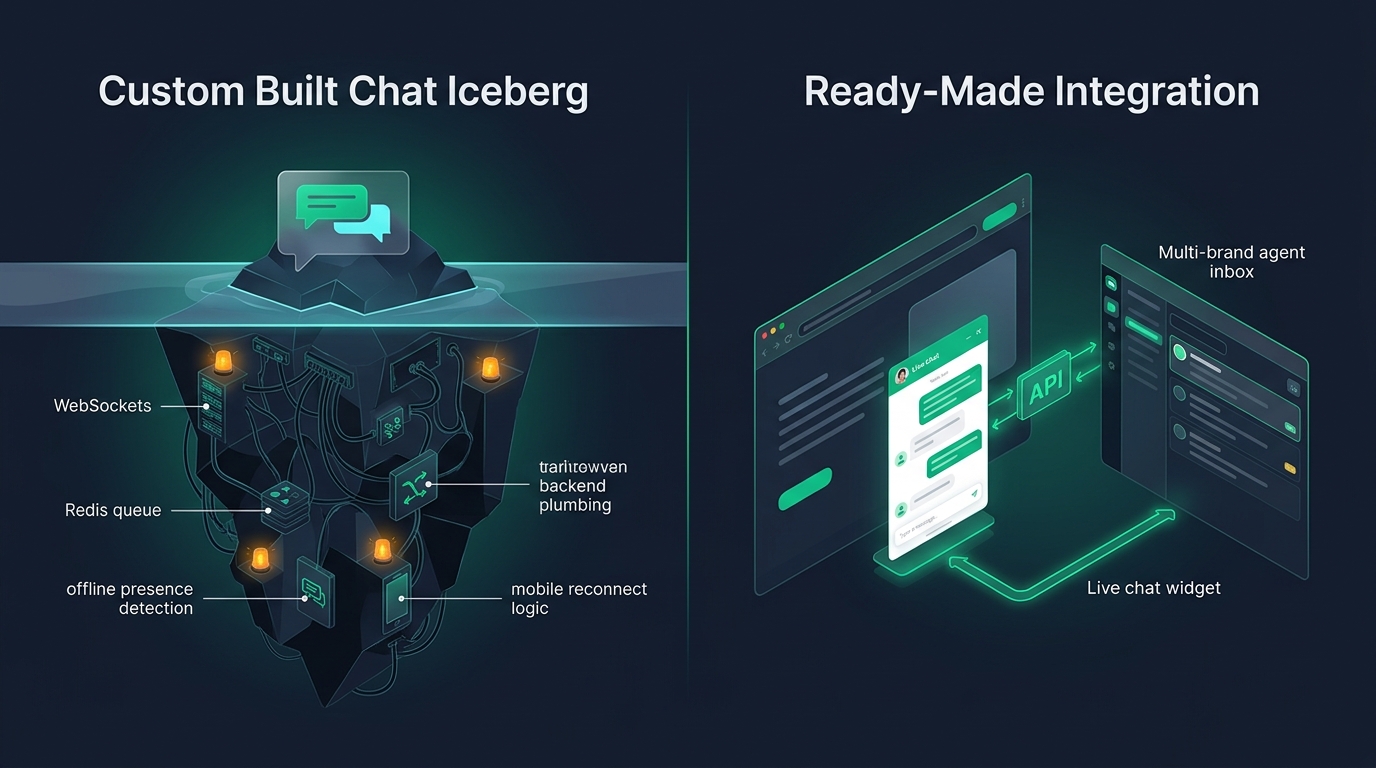
| Real-Time Live Chat | WebSocket connection lifecycles, mobile reconnect state machines, offline queuing, and fallback to email | Managed widgets deliver high availability without dedicated socket infrastructure |
| Knowledge Base & CMS | Static asset generation, custom domain SSL provisioning, hierarchy management, and full-text search indexing | Hosted help centers eliminate CMS maintenance and hosting costs |
| Agent Collaboration Workspace | Agent collision detection, canned responses, internal private notes, keyboard navigation, and SLA countdown timers | Provides support reps with a purpose-built, high-productivity console immediately |
| Private AI Assistance | Self-hosted LLM inference for ticket summarization, tone rewrite, and translation without third-party data sharing | Delivers generative AI speed without vector database hosting or variable token bills |
Vendor Evaluation Criteria for Platform Teams
When selecting a support infrastructure provider to power your SaaS product, evaluate platforms against these developer-centric criteria:
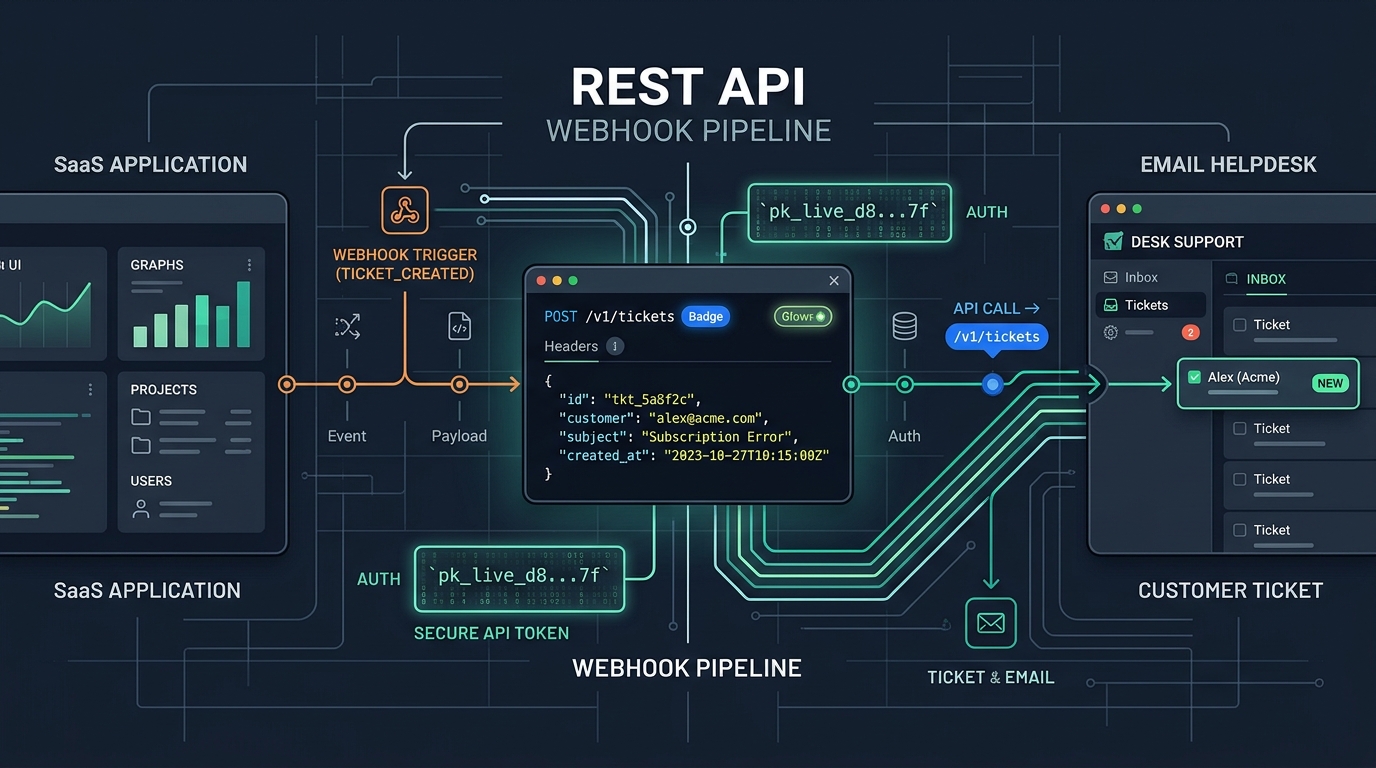
- API and Webhook Ergonomics: Does the platform offer a clean REST API with predictable JSON payloads, idempotency key support, and cryptographically signed webhooks?
- Multi-Domain Brand Isolation: Can you operate multiple product brands, custom domains, and distinct sender identities from a single consolidated back-office?
- Data Portability & Lock-In: Does the platform allow you to export customer tickets, contacts, and knowledge base articles without friction?
- Pricing Scalability: Does the platform penalize growth by charging per agent seat, or does it offer transparent, fixed pricing based on communication channels (inboxes)?
HDdesk as an Integration-Ready Support Layer
HDdesk was engineered specifically to serve as the modern, integration-ready customer support layer for SaaS companies and multi-brand operators.
By combining a developer-friendly REST API and HMAC webhooks with out-of-the-box live chat, custom help-site domains, and private local AI summaries, HDdesk handles the entire operational heavy lifting. Best of all, our plans include unlimited agent seats, allowing your entire team—from engineers and founders to customer support reps—to collaborate without seat licensing penalties.
Review our feature architecture or explore our transparent pricing to elevate your support infrastructure today.