
The In-House Temptation: 'It's Just a CRUD Table'
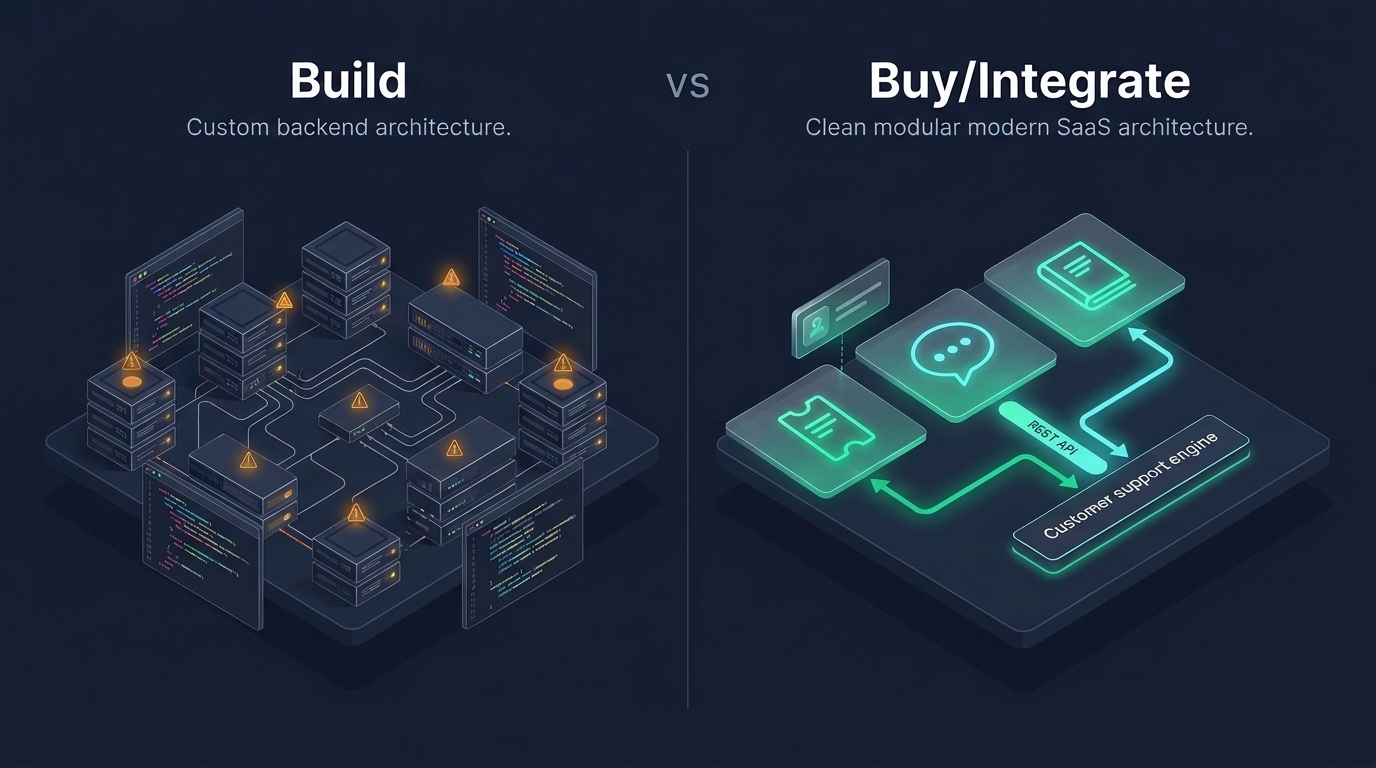
Every growing SaaS engineering team eventually faces the question: Should we build our own internal customer support tool, or integrate a third-party helpdesk?
The argument for building in-house usually starts during a sprint planning session. A product engineer notices that existing enterprise helpdesk platforms charge $50 to $120 per agent each month, lock custom branding behind five-figure annual contracts, and force users into disconnected external portals. Someone sketches a data model on a whiteboard: a tickets table, a messages table, an enum for status, and a simple slide-over modal in the web app.
"We can build an MVP in a couple of weeks," the pitch goes. "Our data stays in PostgreSQL, our users stay in our app, and we never pay another per-seat licensing bill."
It sounds pragmatic. But what begins as a two-week internal project almost invariably mutates into an ongoing engineering sinkhole. The initial prototype is fast; the ongoing surface area of customer support infrastructure is immense.
The Scope Illusion
The visible user interface of customer support—a chat bubble, a contact form, and an inbox queue—represents less than 15% of the engineering required to operate a reliable support system in production.
The Real Scope: An Inventory of Modern Support Infrastructure
Before allocating engineering cycles to an in-house build, product leaders must inventory what modern B2B SaaS customers and support teams actually demand from support infrastructure:
| Subsystem | What It Looks Like on Day 1 | Production Complexity on Day 180 |
|---|---|---|
| Inbound Email | SendGrid webhook parsing incoming emails into ticket rows | Handling multipart MIME, nested attachments, quoted reply headers (In-Reply-To, References), SPF/DKIM validation, and spam rejection |
| Live Chat | Simple WebSocket connection with ephemeral broadcast | Reconnection state machines, offline queueing, agent presence detection, typing indicators, and automatic email fallback |
| Help Center | Markdown files rendered statically | Full-text search indexing, category hierarchies, custom domain SSL provisioning, and versioning |
| Agent Workspace | Basic list view with status dropdown | Agent collision detection, real-time typing alerts, canned responses, internal notes, keyboard shortcuts, and audit logs |
| AI Assistance | One-off call to an external LLM endpoint | Local privacy compliance, zero data retention for customer PII, context-window management, and agent-assist drafting |
| Customer Portal | Simple table listing past tickets | Authenticated SSO mapping, multi-contact organization visibility, and secure attachment delivery |
The Hidden Lifecycle Cost of Custom Support Software
The fatal flaw in most build-vs-buy calculations is evaluating only the initial development cost while ignoring the ongoing operational lifecycle:
1. Email Protocol Quirks and Deliverability
Email remains the bedrock of customer communication. However, email is not a structured REST API. Outlook, Apple Mail, Gmail, and Thunderbird all handle threading, inline images, and signature stripping differently. An in-house parser will consistently misattribute replies, create duplicate tickets from auto-responders, or drop customer attachments when a mail server sends unusual encoding.
2. Internal Feature Requests Competing with Product Roadmap
Once your support team (or founders taking support shifts) starts using the in-house tool, they will immediately request quality-of-life enhancements: "Can we get SLA countdown timers?" "Can we assign tickets based on customer time zones?" "Can we bulk-tag issues related to an incident?"
Because the software was built internally, your engineering team is now the dedicated IT vendor for your support staff. Every support enhancement request directly competes with revenue-generating customer features on your primary roadmap.
3. Security, Access Control, and Compliance
Support queues contain sensitive user data: billing questions, error traces, authentication issues, and private customer information. If you build your own support backend, your team is responsible for implementing granular role-based access control (RBAC), session revocation, data retention policies, and GDPR audit logging for the support subsystem.
Opportunity Cost: What Aren't You Shipping?
Consider a standard B2B SaaS startup. Suppose an initial internal support tool takes two senior engineers four weeks to build, followed by roughly 10–15 hours of engineering maintenance each month for bug fixes, database index optimization, and email edge-case handling.
In pure engineering time, that initial build represents roughly 320 developer hours, with an ongoing drain of 120–180 hours every year. In early-stage software companies, engineering velocity is the single strongest determinant of survival. Diverting an entire sprint of senior engineering attention toward building ticketing tables—something that provides zero unique competitive differentiation—is rarely defensible.
The Differentiation Test
Ask: "Will customers buy our product because our ticketing backend is proprietary?" If the answer is no, support is operational infrastructure, not intellectual property.
When Does Building In-House Actually Make Sense?
Building custom support software is not always the wrong choice. In certain narrow circumstances, an in-house build is justified:
- Air-Gapped or Highly Regulated Deployments: If your software runs entirely in isolated on-premise environments where no external SaaS platform can connect, an internal communication tool may be required.
- Support is the Core Product: If you are building a customer relationship management (CRM) suite or an enterprise ticketing platform yourself, your support infrastructure is your core IP.
- Radically Non-Standard Workflows: If your customer interaction model does not fit tickets, chats, or documentation (for instance, an algorithmic trading interface where support occurs via automated FIX protocol messages), off-the-shelf helpdesks cannot adapt.
The Modern Alternative: API-First Support Infrastructure
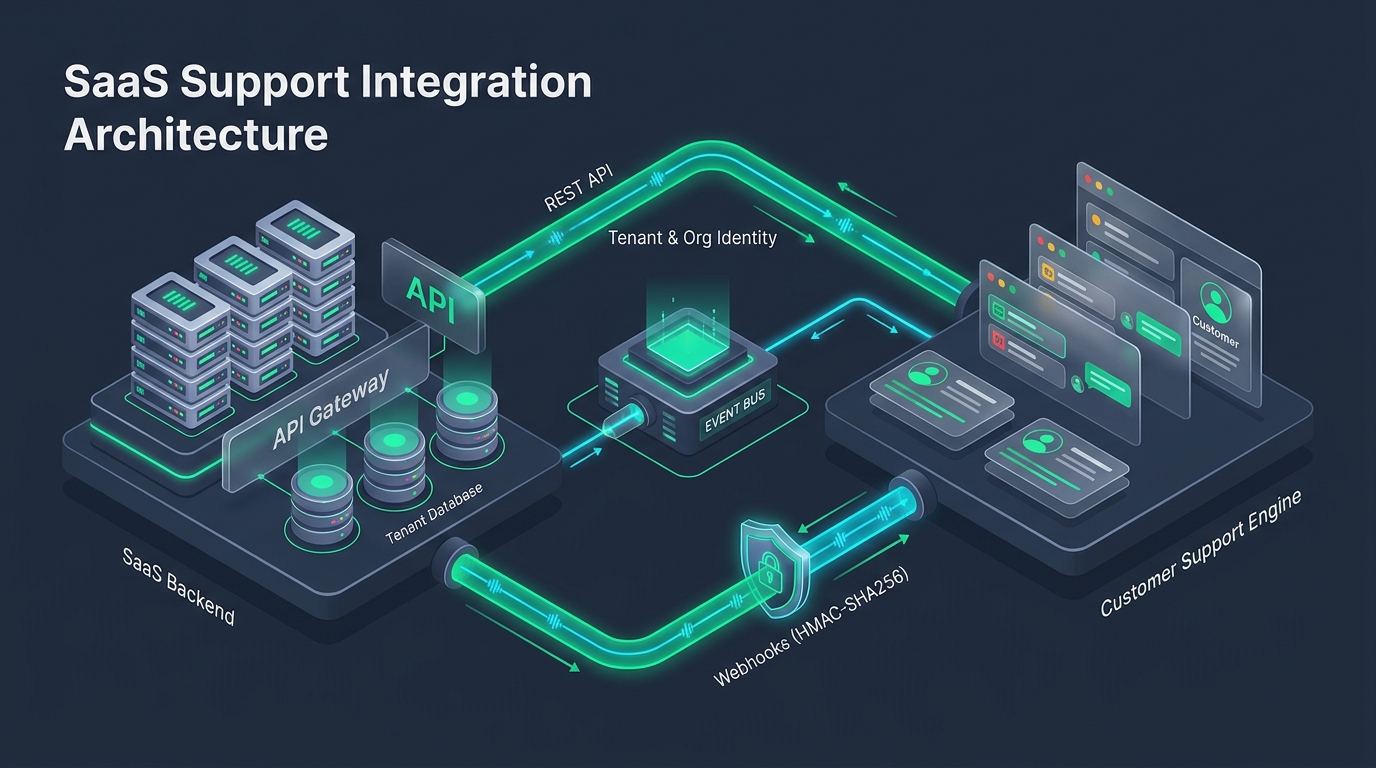
Historically, the dilemma was painful: build a bespoke tool from scratch, or buy a bloated enterprise helpdesk that forces you into per-seat pricing and jarring third-party branding. Today, modern platforms offer a third path: consuming support as infrastructure.
With an API-first helpdesk like HDdesk, SaaS teams can bridge the gap:
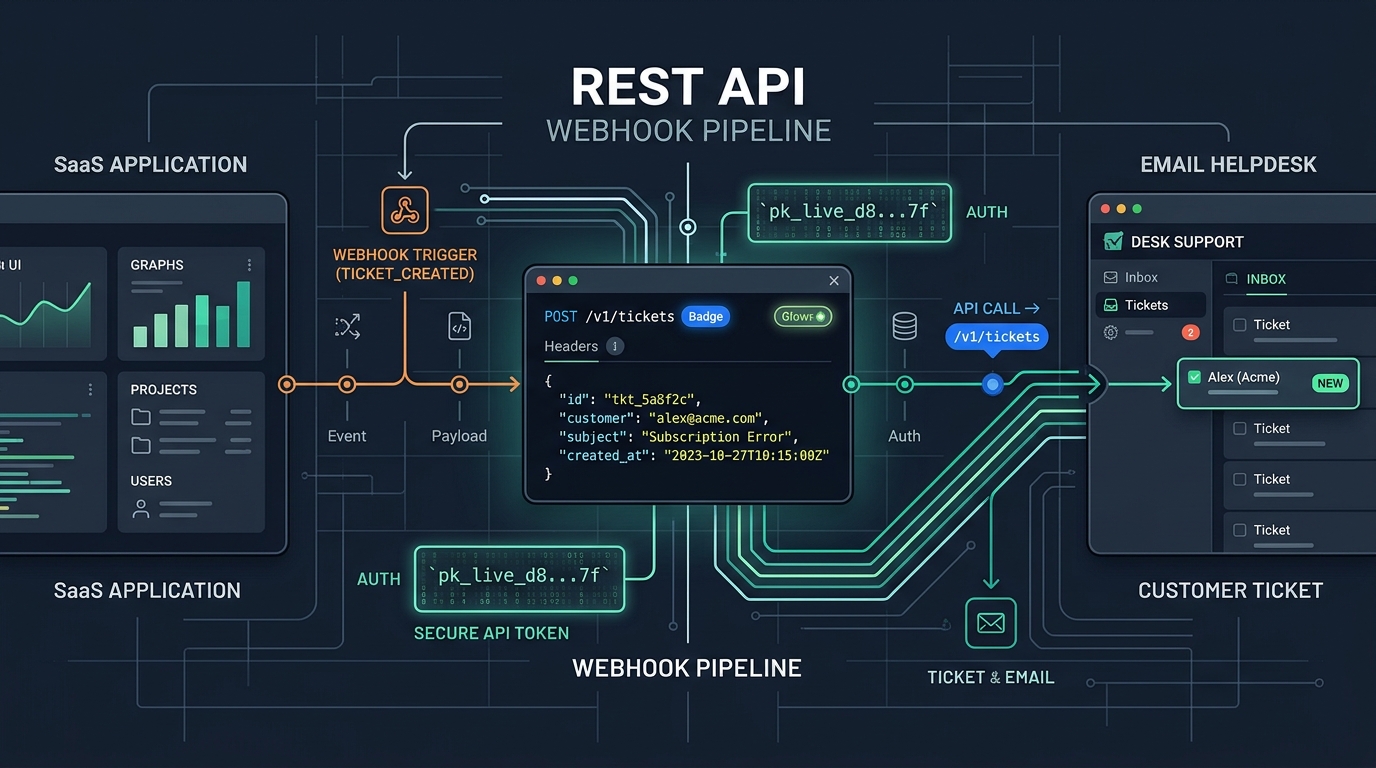
- Native In-App UX: Use the REST API to trigger tickets, embed native contact forms, and display past ticket status directly inside your SaaS application.
- Zero Per-Seat Taxation: With unlimited agent seats on all plans, your engineers, founders, and customer success reps can all access the support console without incurring per-seat charges.
- Managed Heavy Lifting: Inbound email parsing, deliverability, live chat WebSockets, help center hosting, and private agent AI summaries are fully managed by the platform.
- Complete Brand Independence: Outbound emails send through your custom domains with your SPF/DKIM records, preserving your brand identity at every touchpoint.
The SaaS Build-vs-Buy Decision Checklist
Before writing a single line of ticketing code, review this checklist with your technical team:
- [ ] Do we have a dedicated engineer who will maintain email MIME parsers, WebSocket reconnects, and database indexing for support over the next 24 months?
- [ ] Will building this support system directly increase our monthly recurring revenue (MRR) or reduce customer churn?
- [ ] Can our requirements be satisfied by integrating a modern multi-inbox helpdesk via webhooks and REST APIs?
- [ ] Have we evaluated predictable per-inbox pricing against the total fully-loaded engineering cost of an in-house build?
For the vast majority of SaaS businesses, the smartest technical decision is to treat customer support as managed infrastructure—integrating a reliable support engine while focusing scarce developer talent on shipping your core product.