
The Shifting Bottleneck: From Writing Code to Running Systems
Between LLM-powered IDEs, automated scaffolding utilities, and serverless edge runtimes, the technical barrier to launching software has never been lower. An indie hacker can write full-stack applications in a weekend that previously required a dedicated team of five engineers.
However, many solo builders discover a sobering truth within ninety days of shipping: building is only the first 20% of a SaaS business. The remaining 80% is ongoing operation.
Once users sign up, code is no longer your primary bottleneck. Your operational load consists of managing payment exceptions, monitoring edge deployment errors, answering user questions, debugging integration payloads, and maintaining SLA expectations across several live products simultaneously.
If you stitch together an arbitrary patchwork of heavyweight enterprise tools, you end up spending more time managing your administrative software than improving your products. To thrive as an AI-assisted indie hacker running multiple micro-SaaS businesses, you need a disciplined, minimal stack designed for leverage.
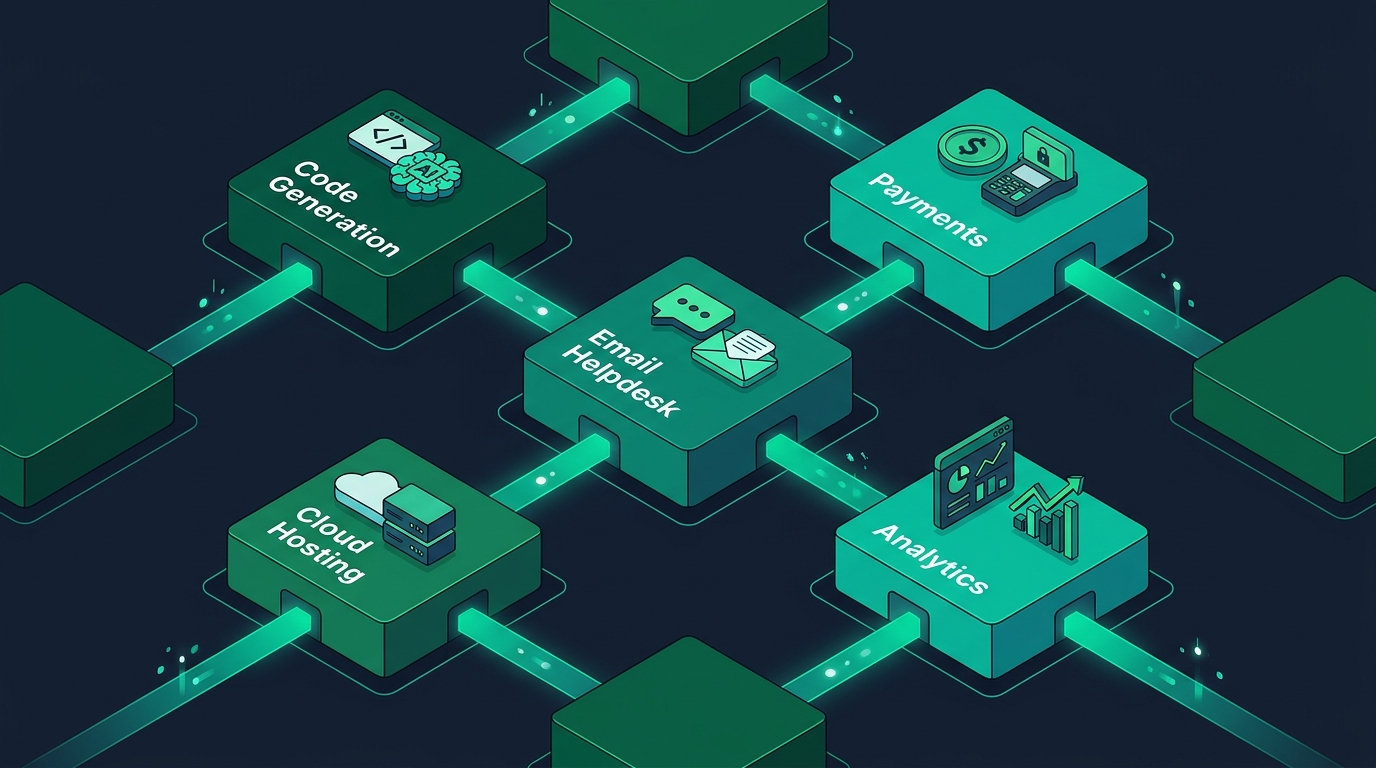
The Essential Stack Layers by Job-to-be-Done
Rather than chasing every trending tool on Twitter, evaluate your stack by the specific operational jobs required to keep your software portfolio healthy:
1. Code Generation & Architecture
Modern solo builders rely on AI-first development environments (like Cursor, Claude Code, or GitHub Copilot) paired with battle-tested frameworks like Next.js, Vite, or Go. The key rule here is standardization: use the same core framework and directory layout across all your products. Reusing database schemas, authentication middleware, and styling conventions allows you to jump between codebases without mental friction.
2. Edge Hosting & Infrastructure
Platforms like Cloudflare Workers, Pages, and Vercel provide instant global distribution with zero server maintenance. With serverless architecture, you don't spend Sunday nights patching Linux kernels or worrying about container memory leaks. If a product gets mentioned on a major tech newsletter, the infrastructure scales automatically.
3. Billing & Merchant of Record
Do not attempt to write custom tax compliance logic for global digital goods. Use Stripe Billing or an established Merchant of Record (such as Lemon Squeezy or Paddle) that handles global VAT, sales tax remittance, and localized payment methods. Standardize your webhook handling so subscription upgrades and cancellations flow smoothly into your customer database.
4. Lightweight Product Analytics
Avoid cumbersome analytics suites that require 40 tracking cookies and complex tag managers. Lightweight, privacy-friendly tools like Plausible or self-hosted PostHog give you the exact metric that matters: where your visitors come from, which landing pages convert, and where users drop off in your funnel.
5. Customer Support & Multi-Brand Helpdesk
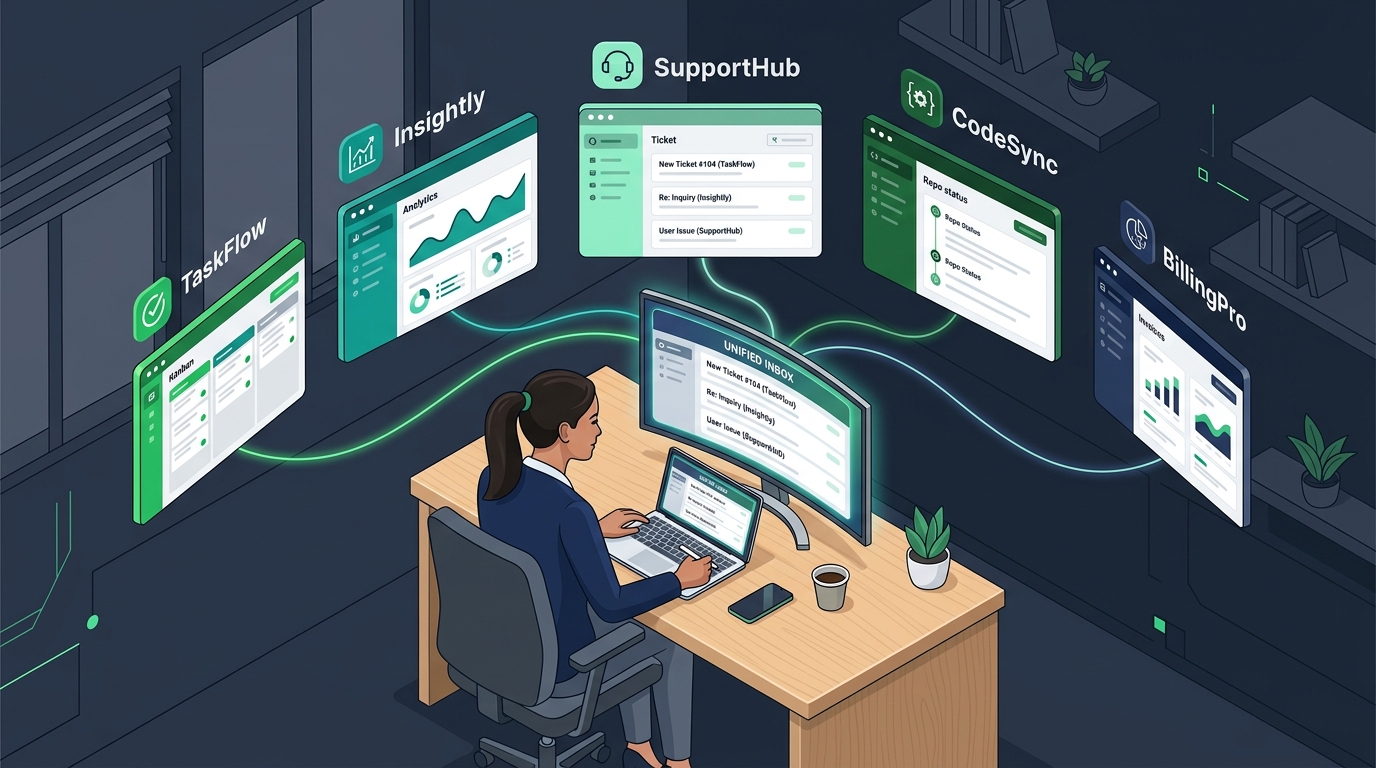
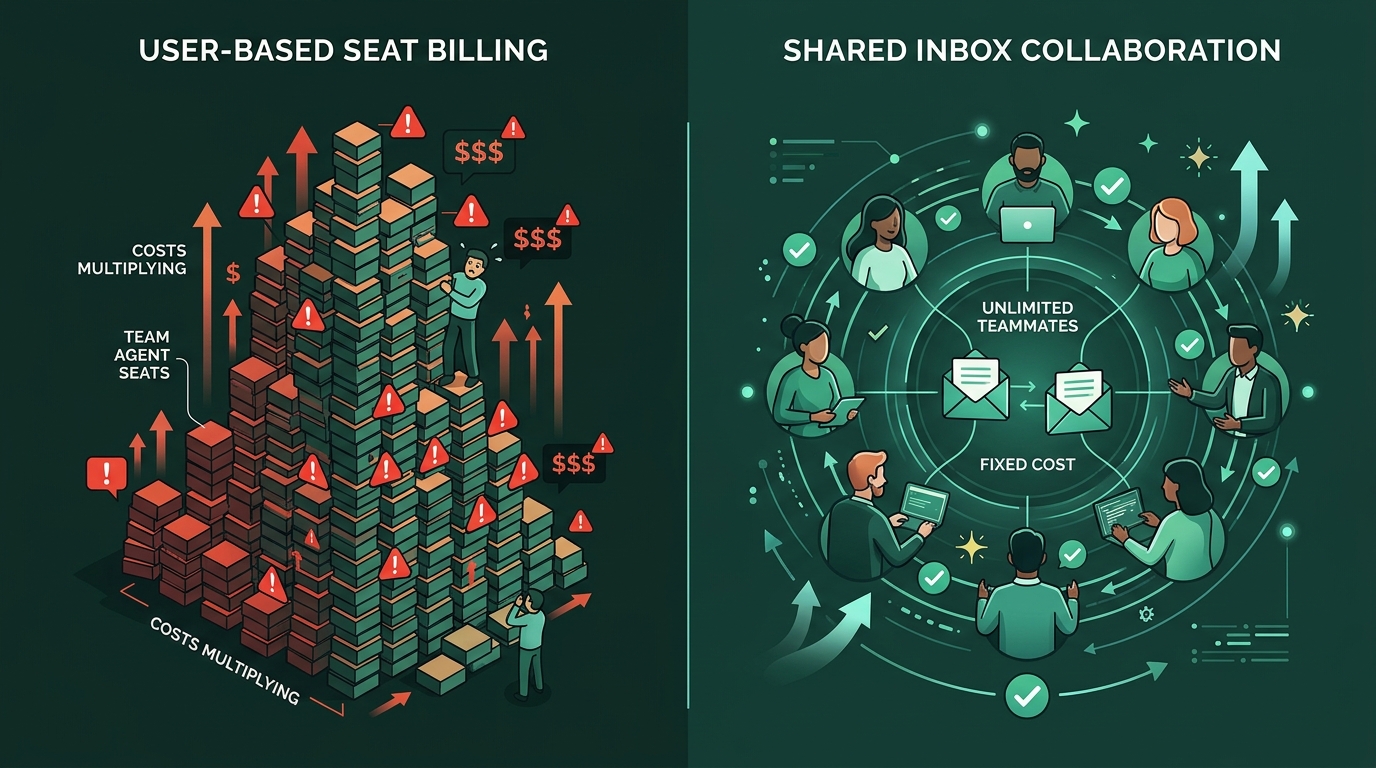
Support is where solo founders lose the most time if unmanaged. You cannot afford to log into five separate Google Workspace accounts or pay $50/month per agent across five different Zendesk subscriptions. You need an email-first helpdesk like HDdesk that aggregates all your product inboxes into one unified inbox while preserving distinct brand signatures, templates, and domain verification for each app.
| Operational Job | Legacy Enterprise Approach | Lean AI Indie Hacker Stack |
|---|---|---|
| Hosting | Dedicated VPS clusters, Kubernetes | Cloudflare Workers / Vercel Edge |
| Customer Support | Zendesk / Intercom ($60+/seat/mo) | HDdesk ($9–$25/mo flat for inboxes, unlimited teammates) |
| Payments | Custom gateway + tax accounting | Stripe Billing or Merchant of Record |
| Analytics | Google Analytics 4 / Adobe | Plausible / PostHog |
| Error Tracking | Complex APM monitoring | Sentry with automated Slack/Discord alerts |
The Hidden Tax: Dashboard Sprawl
Every tool you add introduces administrative drag: an additional browser tab, another authentication MFA prompt, another billing renewal, and another set of API keys to rotate.
When running a portfolio of products, dashboard sprawl quickly becomes toxic. If you have four products and use five tools per product, you are juggling twenty separate administrative interfaces. You spend your morning clicking between tabs just to check if anything broke overnight.
The solution is aggressive consolidation in your communication layer. By funneling all customer support emails, contact form submissions, and critical alerts into a single helpdesk queue, you create a single pane of glass for daily operations. You wake up, open your support queue, clear issues across all four products in 40 minutes, and get straight back to building.
The 5-Point Portfolio Stack Evaluation Checklist
Before adopting any software tool for your indie hacker business, run it through this five-point filter:
- 1. Does it scale by resources rather than user seats? As a solo founder, you may want to bring in a virtual assistant, a freelance QA tester, or a technical friend. If a tool charges $40 per user seat, it penalizes you for collaborating. Prefer tools that charge by usage, inboxes, or projects.
- 2. Does it offer a clean, documented REST API? You should be able to trigger actions programmatically. Whether it's creating a support ticket from an error boundary or syncing customer data, an accessible API ensures your tools talk to each other.
- 3. Does it respect customer privacy? In an era of strict GDPR and data privacy laws, using clean, cookie-free, privacy-compliant tools prevents legal liabilities across international markets.
- 4. Is setup measured in minutes, not days? If a tool requires three onboarding sales calls and a custom implementation consultant, it is wrong for an indie hacker. You should be up and running with a verified domain in under twenty minutes.
- 5. Is your data portable? Can you easily export your customer history, ticket records, and analytics if you decide to change providers later? Never lock your portfolio into a proprietary walled garden.
API Tip for Builders
Check out our guide on integrating customer support into your SaaS via API to see how to programmatically connect your application error boundaries and contact forms directly into your helpdesk.
Assembling Your Operational Stack
The goal of the modern indie hacker stack isn't to accumulate tools—it's to achieve maximum autonomy. When your hosting is maintenance-free, your billing is automated, and your customer support is centralized into one calm queue, you can operate a multi-product SaaS portfolio as a single individual with the operational polish of a mature company.
Audit your current workflow today. Strip away redundant dashboards, consolidate your incoming communication channels, and build a streamlined stack that scales with your ambition.
Centralize your product portfolio's support today
HDdesk brings all your SaaS product inboxes into one calm, organized workspace. Enjoy branded replies, automated routing, and unlimited teammates on every plan.