
The Micro-SaaS Portfolio Challenge
Operating a micro-SaaS portfolio is one of the most rewarding business models in software today. Instead of betting your entire livelihood on a single high-risk venture, you develop several focused, cash-flow-positive software utilities that each solve one specific problem exceptionally well.
For example, you might run:
- A specialized invoice generator for design freelancers (
invoiceninja.example). - A lightweight uptime monitoring agent for developers (
pingwatch.example). - A Notion-to-blog publishing extension (
notionpress.example).
Each of these micro-SaaS products has its own audience, positioning, pricing model, and domain. While the codebases and target personas are completely distinct, the person responsible for customer happiness across all three is the same: you.
As user volume grows, managing customer questions across multiple disconnected micro-SaaS products quickly becomes overwhelming if you lack a unified system.
The Generic Mailbox Anti-Pattern
When solo founders realize they cannot keep logging into three separate mailboxes every day, they often make a critical mistake: they create a generic parent company mailbox—such as support@myholdingsllc.com—and force all their products to use it.
This approach introduces severe friction:
- Brand Confusion: A user who purchased a $19/month uptime monitor gets an email reply from "My Holdings LLC." They don't know who this entity is, assume it's spam, or worry that their account was acquired by an unknown third party.
- Unclear Problem Scope: When a customer emails with a vague message like "My export failed today," you don't know which product they are talking about. You waste a reply asking, "Which of our four apps are you using?", delaying resolution by twenty-four hours.
- Erosion of Perceived Value: Micro-SaaS thrives because customers value boutique, dedicated software built for their niche. Looking like an anonymous corporate conglomerate undermines the very charm that won you the customer.
The Danger of Generic Replies
Never reply to a micro-SaaS customer from an email address or signature that doesn't match the exact domain they signed up on. Brand consistency directly correlates with churn prevention.
The Golden Rule: Centralized Internal Triage, Strict Brand Isolation
The only sustainable way to manage customer support for multiple micro-SaaS products is to enforce a strict separation between external brand identity and internal queue management.
Outbound: Strictly Branded Identity
Every outbound email must originate from the appropriate domain (e.g. support@invoiceninja.example), pass cryptographic DKIM/SPF checks for that domain, carry a tailored signature, and link to that specific product's documentation or status page.
Inbound: Unified Triage Queue
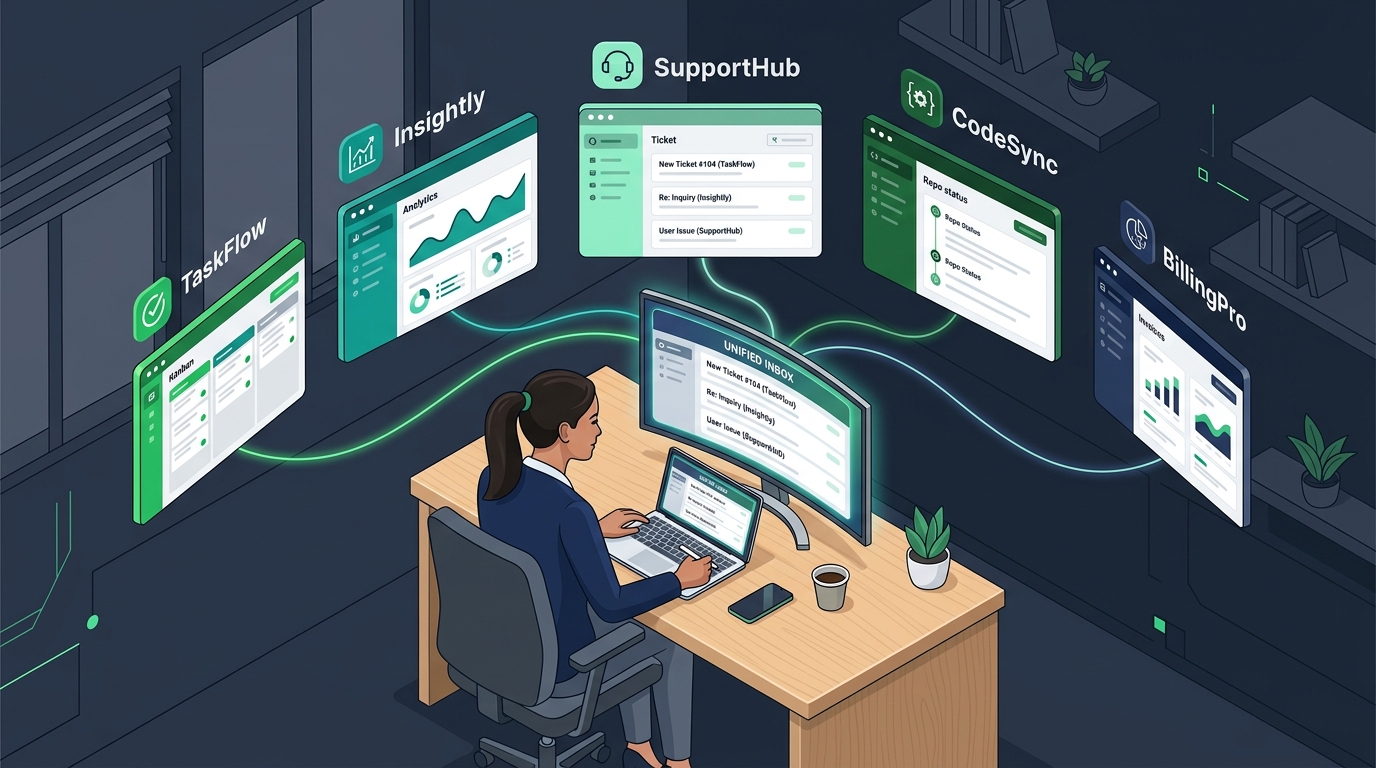
Behind the scenes, your helpdesk should aggregate all incoming messages from every domain into a single shared inbox. When a ticket arrives, the helpdesk automatically tags it with the product name based on the destination address. You can view all open tickets in one prioritized feed, or click a quick filter to focus exclusively on one product when doing targeted bug fixes.
This is the core architecture built into HDdesk: each inbox you connect retains its own sender name, reply-to address, templates, and SLA policy, but your team works out of one consolidated view.
Daily Operating Routines for Micro-SaaS Support
To prevent support from interrupting your development flow, establish structured operating rhythms:
1. Standardize Ticket Categories
Regardless of what your micro-SaaS products do, 90% of your tickets will fall into one of four buckets:
- Bug Reports: Something in the application broke. (Requires reproduction and code fix).
- Account & Billing: Upgrades, refunds, VAT updates, card changes. (Fast resolution).
- How-To / Onboarding: "Where do I find my API key?" or "How do I configure my DNS?" (Resolved with pre-written macros).
- Feature Requests: Useful ideas from power users. (Tagged and logged for review).
Train yourself to tag incoming tickets within five seconds of opening them. This allows you to resolve the quick account and billing questions immediately, while grouping technical bugs into your scheduled coding sessions.
2. The "Fix It in the Product" Feedback Loop
When you run micro-SaaS products, the best customer support is the support ticket that never needed to be sent. If three customers ask how to export their invoices in the same week, don't just write a macro—update the UI button label or add a tooltip inside the application. Every ticket you resolve should prompt the question: "How could the product have made this self-explanatory?"
Delegating Support Without Per-Seat Penalties
Eventually, your micro-SaaS portfolio will reach an MRR where spending 90 minutes a day answering support email is no longer the best use of your time. You will want to bring in a part-time virtual assistant or support specialist to handle tier-1 questions.
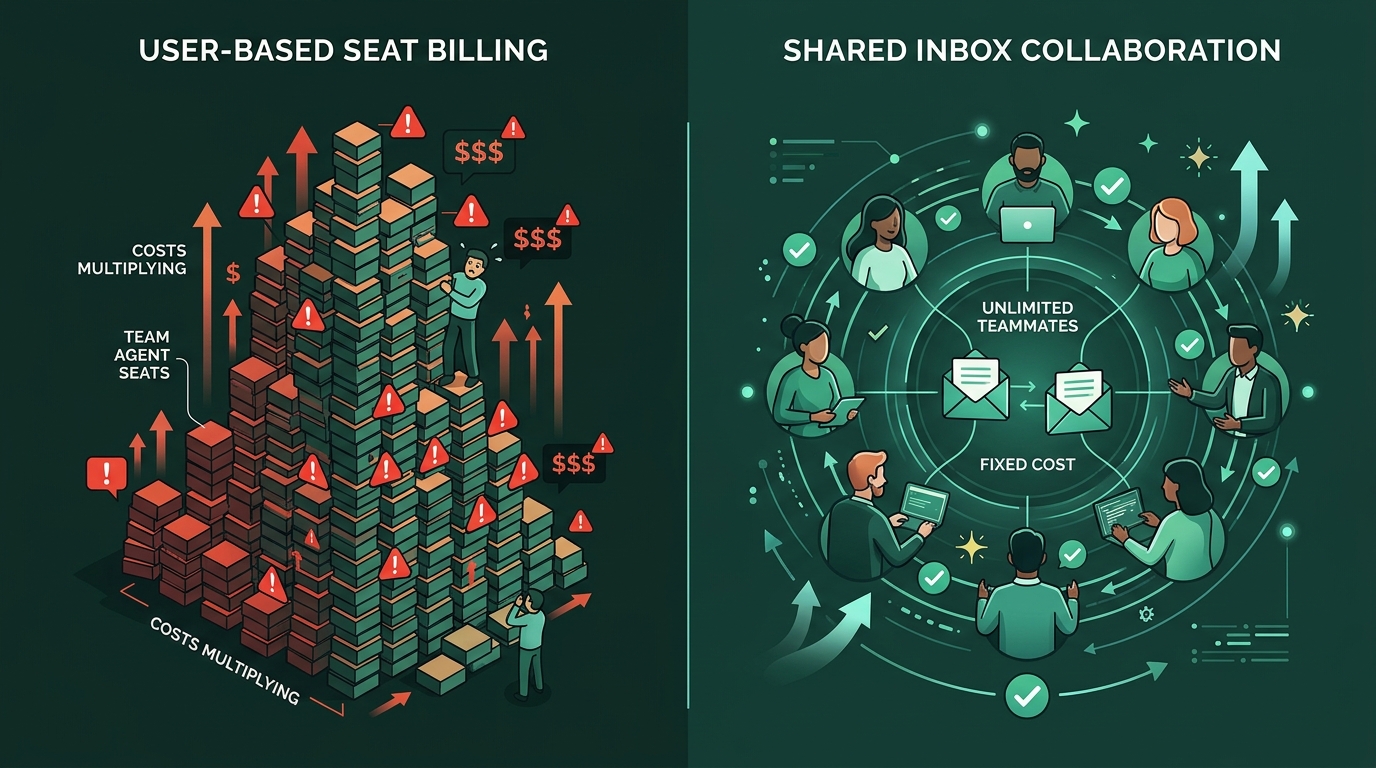
Under conventional per-agent pricing models, adding an assistant can double your software bill. Many helpdesks charge $30 to $60 per user seat, making it economically irrational to add part-time collaborators who only work a few hours a week.
With an inbox-based model like HDdesk, you can invite your assistant, your co-founder, or a contract developer at no additional seat cost. Everyone gets their own secure login, collisions are prevented in real time, and you maintain a clear audit trail of who sent which response.
Stop juggling mailboxes for your micro-SaaS products
Connect all your micro-SaaS inboxes into HDdesk. Enjoy separate brand templates, automated routing, and unlimited team members on every plan.
Action Plan for Micro-SaaS Builders
If you have launched more than one micro-SaaS product, don't wait for a flood of angry user emails to organize your support. Take three practical steps today:
- Stop checking individual webmail accounts and route all product addresses into a single helpdesk workspace.
- Configure product-specific signatures and templates to keep your brand identities crisp and authentic.
- Implement an inbox-priced helpdesk so you can collaborate with teammates as your portfolio grows.
By treating support infrastructure as a core operational asset rather than an afterthought, you can run a thriving multi-product software business with calm, predictable efficiency.