
The True Cost Equation: Beyond the Initial Build
When engineering leaders evaluate the cost of building an internal tool, they often make an overly simplistic calculation: "Two engineers for four weeks equals approximately X dollars. If we build it ourselves, we save on annual software subscriptions forever."
In practice, this formula misses the majority of the financial picture. The real financial formula for custom internal software is:
Total Cost of Ownership (TCO) = Upfront Build + Ongoing Infrastructure + Recurring Maintenance + Opportunity Cost
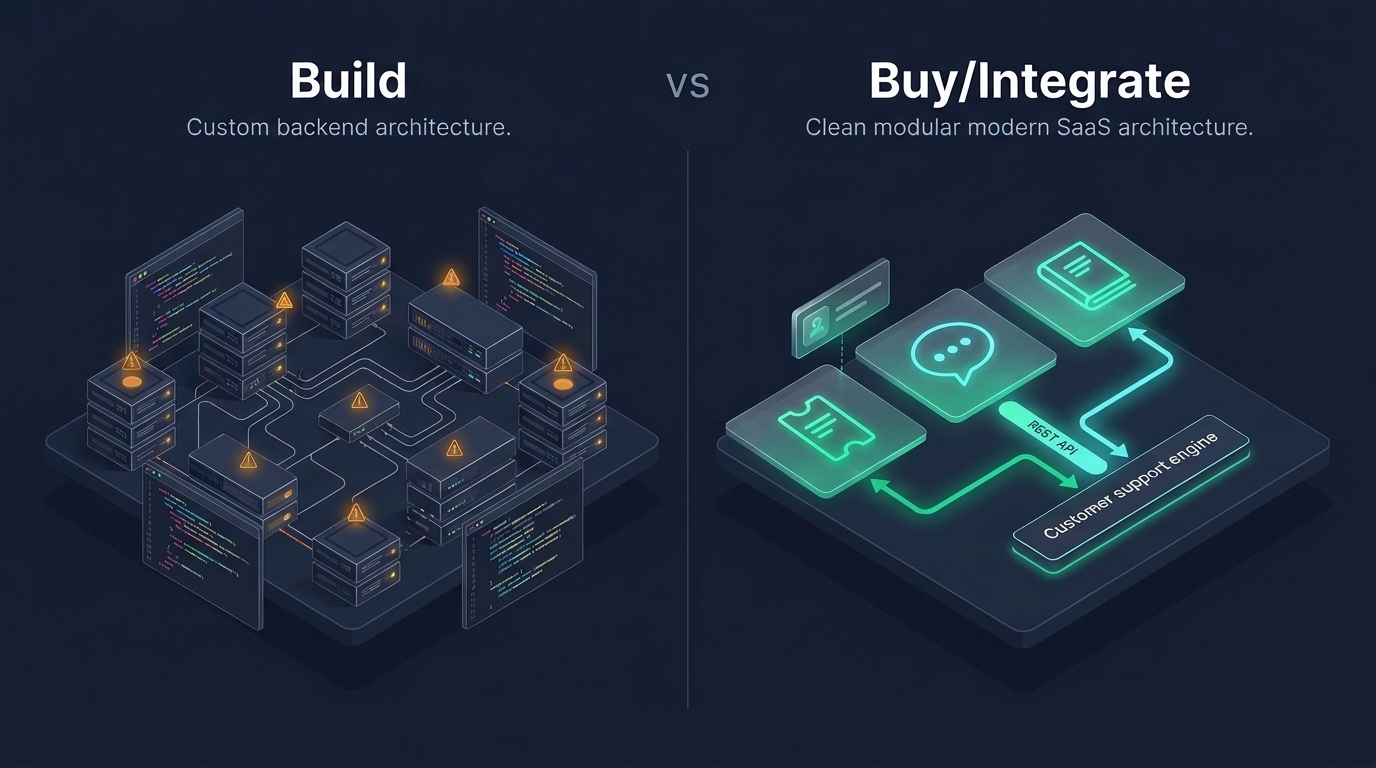
When you account for the complete lifecycle of software development, building an internal customer support platform is rarely the economical path for a SaaS company.
One-Time Upfront Engineering Expenses
To build a production-grade support system capable of serving modern B2B customers, an engineering team must design, develop, test, and deploy multiple interconnected modules:
| Development Phase | Scope of Work | Typical Engineering Commitment |
|---|---|---|
| Data Modeling & Core Engine | Database migrations, ticket state machine, assignment logic, search indexing, and role-based permissions | 1 Senior Backend Engineer (3–4 weeks) |
| Inbound / Outbound Email Gateway | MIME multipart parsing, attachment security, SPF/DKIM verification, threading headers, and bounce handling | 1 Backend Engineer (3–4 weeks) |
| Agent Triage Console | Real-time ticket queue, conversation view, internal collision detection, keyboard shortcuts, and response templates | 1 Frontend Engineer (4–5 weeks) |
| Help Center & Live Chat Widget | Public knowledge base hosting, full-text search, embeddable WebSocket chat widget, and mobile responsiveness | 1 Full-Stack Engineer (3–4 weeks) |
| QA, Security & Compliance Review | Penetration testing, XSS sanitization in email renderers, PII handling audits, and edge-case testing | Security & QA Engineers (2 weeks) |
Across a small engineering team, this initial sprint represents hundreds of senior developer hours. Even at conservative engineering compensation benchmarks, the initial capital outlay required to ship a bare-minimum MVP is substantial.
Recurring Operational & Infrastructure Overhead
Once deployed, software does not run for free. An in-house support stack introduces a steady stream of recurring operational expenses:
- Database Storage & Backup Overhead: Ticket discussions, full email MIME payloads, and customer screenshots consume gigabytes of high-performance database storage and require regular snapshotting.
- Email Ingestion & Delivery APIs: High-volume transactional email providers (SendGrid, Postmark, AWS SES) charge per message sent and received, with additional fees for dedicated IP addresses to protect deliverability.
- Search Cluster Hosting: Maintaining full-text search across thousands of customer tickets requires running and scaling Elasticsearch, OpenSearch, or pgvector clusters.
- Routine Maintenance & Bug Fixes: Internal tools inevitably accumulate bugs. Browser updates break CSS widgets, email providers change header conventions, and database indices degrade. Industry research consistently shows that ongoing maintenance of custom software consumes 15% to 25% of the original build effort every single year.
The Opportunity Cost Multiplier
The single greatest financial cost of building in-house support software is neither server bills nor developer salaries—it is opportunity cost.
Every week your senior backend architects spend building email parsers and debugging ticket threading is a week they are not building:
- The enterprise feature your largest prospect is waiting on to sign an annual contract.
- Performance optimizations that reduce your primary application's AWS infrastructure bill.
- Integrations with high-value third-party platforms that expand your addressable market.
The Velocity Principle
Software startups win on execution speed in their primary problem domain. Diverting your best technical minds into building generic utility infrastructure slows company velocity and gives competitors an open window to out-innovate you.
The TCO Decision Worksheet
Before committing engineering resources, complete this worksheet using your company's actual numbers:
| Cost Category | In-House Build Estimate | Specialized SaaS Subscription |
|---|---|---|
| Initial Engineering Build | [Dev hours] × [Hourly rate] = $______ |
$0 (Instant onboarding) |
| Annual Maintenance (20% of build) | [Annual dev hours] × [Hourly rate] = $______ / yr |
$0 (Included in platform) |
| Hosting, Database & Email APIs | $______ / month |
$0 (Included in plan) |
| Opportunity Cost of Delayed Features | [Estimated delayed revenue] = $______ |
$0 (Full focus on core product) |
| Total 3-Year Projected Cost | $_________________ | $_________________ |
The HDdesk Alternative: Predictable Per-Inbox Pricing
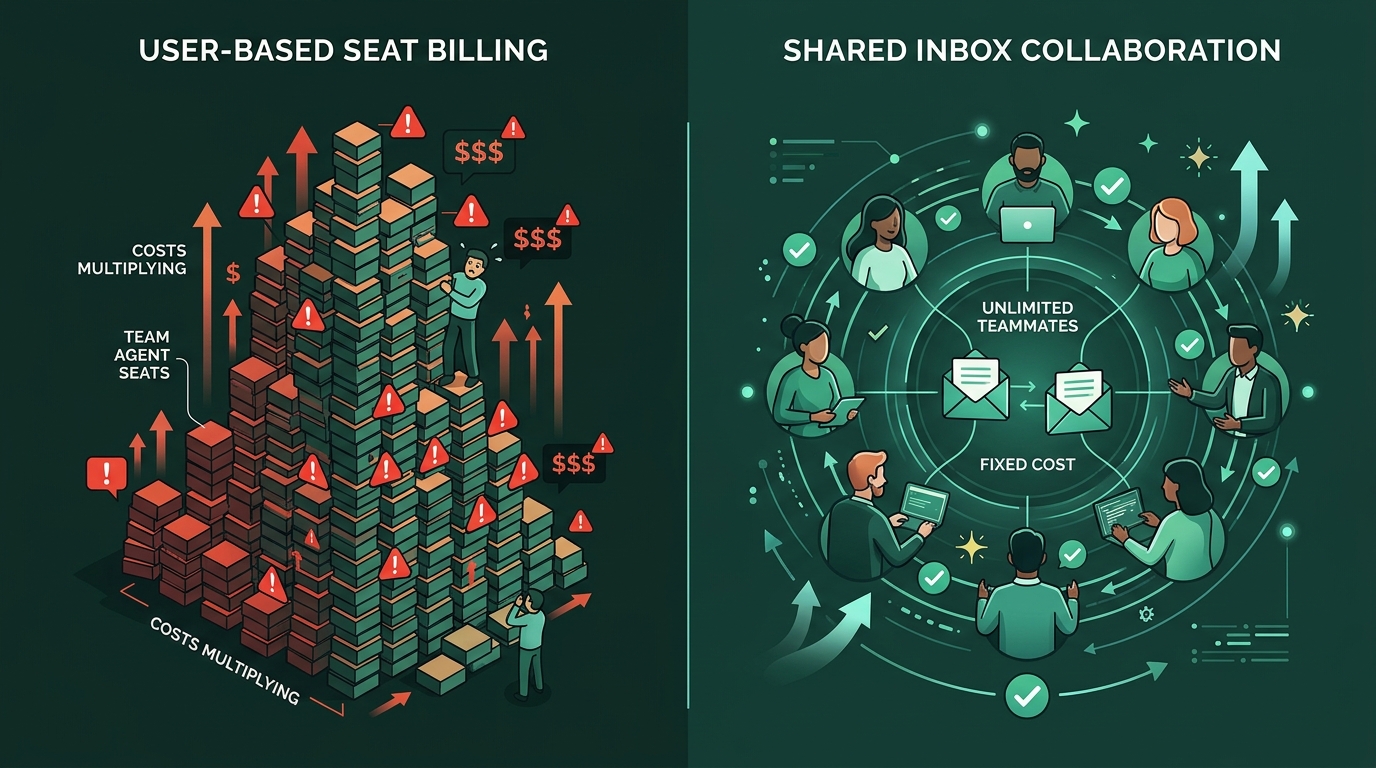
Why do companies consider building their own support tools in the first place? Almost always, it is a reaction to the predatory pricing of legacy helpdesk vendors, who charge $50 to $120 per agent each month and penalize companies as they grow.
HDdesk changes this equation by aligning pricing with reality. We price by the number of inboxes—not by the number of human beings reading the messages:
- Small Plan ($10/mo): Up to 3 inboxes, 20GB storage, unlimited agent seats.
- Medium Plan ($25/mo): Up to 10 inboxes, 100GB storage, unlimited agent seats.
- Large Plan ($65/mo): Up to 30 inboxes, 500GB storage, unlimited agent seats.
- Add-on Inboxes ($3/mo): Need a few more? Add extra inboxes to any plan for just $3 each per month.
At $10 to $65 per month with zero per-agent taxes, HDdesk delivers complete enterprise support infrastructure—including live chat, help centers, private agent AI, and custom domains—for less than the cost of a single engineer's lunch. View our transparent pricing plans and start a free 14-day trial today.